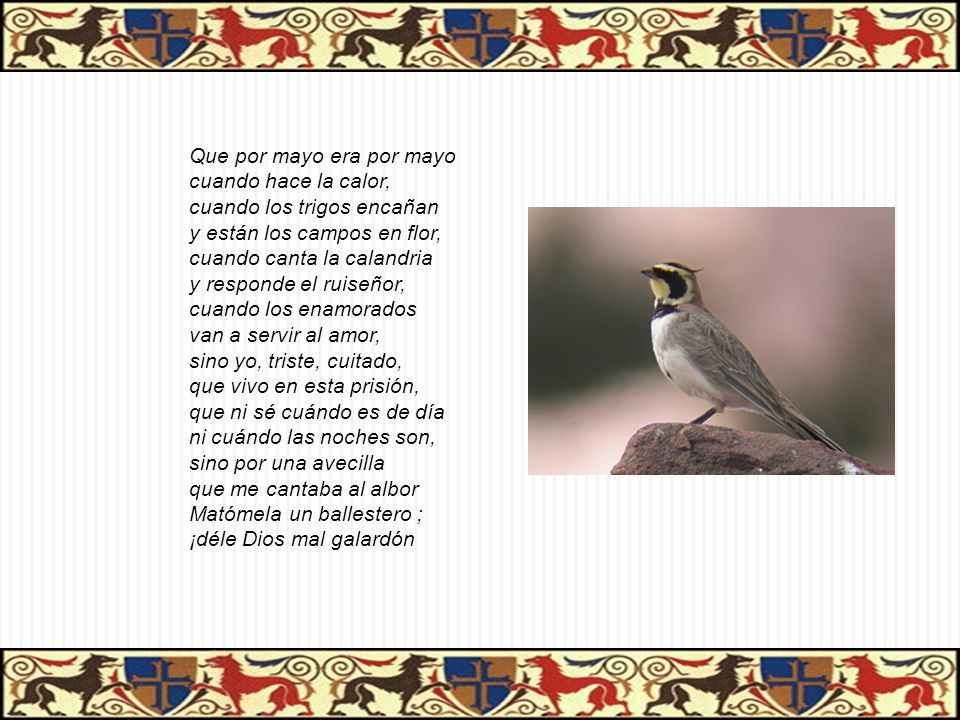
Matómela Un Ballestero Déle Dios Mal Galardón
Matómela un ballestero, Déle Dios mal galardón. It’s an old Spanish phrase, essentially a curse or a wish for misfortune upon someone, specifically a crossbowman.
What does it mean?
Broken down, it's quite straightforward. Matómela means "a crossbowman killed her/him/it." The verb "matar" means to kill. Un ballestero is "a crossbowman." Finally, Déle Dios mal galardón translates to "May God give him a bad reward" or "May God punish him." So, the entire phrase laments a killing done by a crossbowman and asks God to deliver a just, but negative, consequence upon the perpetrator.
Context and History
This phrase isn't used in modern Spanish. It hails from the Middle Ages, specifically the era of ballads (romances) and epic poems. Crossbows, at the time, were relatively new and considered rather unsporting weapons. Unlike swords or bows and arrows that required considerable skill and bravery to use effectively in close combat, a crossbow could be operated with less training and at a longer distance. This made them seem less honorable, even cowardly, in the eyes of some.
Think of a traditional duel with swords. Two warriors, face to face, testing their skills. Compare this with a crossbowman hidden in the shadows, killing from afar. The phrase reflects this sentiment. It suggests a violation of the perceived rules of engagement.
Figurative Use
While the literal meaning involves a crossbowman, the phrase can be used figuratively. Imagine someone suffering a great loss due to the actions of another. Perhaps a businessman ruthlessly bankrupts a family company. While no crossbow is involved, you might think "Matómela un ballestero, Déle Dios mal galardón," wishing justice (or revenge) upon the person responsible. You're expressing your outrage and hoping for karmic retribution.
Similar Expressions
Modern Spanish offers less dramatic ways to express similar feelings. "Que le caiga un rayo" ("May lightning strike him/her") is a common, albeit less intense, expression of wishing misfortune upon someone. "Ojalá que le vaya mal" ("I hope things go badly for him/her") is another option. The original phrase is far more colorful and historically significant, however.
In conclusion
Matómela un ballestero, Déle Dios mal galardón is more than just a curse. It's a window into the medieval mindset, reflecting societal values about warfare, honor, and the perceived fairness of weapons. Although no longer in common use, understanding its meaning enriches our appreciation for historical literature and the evolution of language.
It serves as a reminder that even seemingly simple phrases can carry significant historical and cultural weight. Next time you encounter it in old texts, you'll know it's more than just bad luck being wished upon a crossbowman! And remember, while the sentiment is understandable in fiction, wishing actual harm on others isn't a great idea.