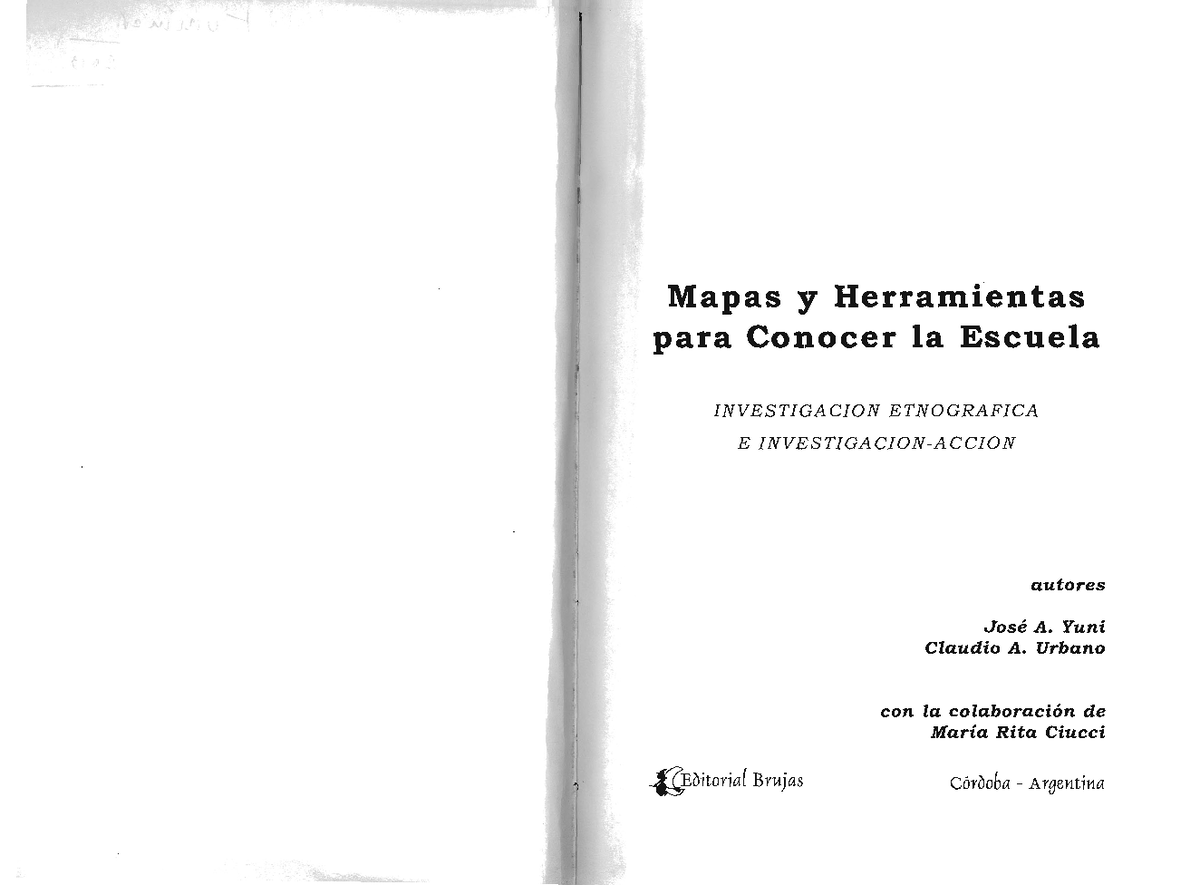
Mapas Y Herramientas Para Conocer La Escuela Yuni Pdf

Mapas y Herramientas para Conocer la Escuela, often found in PDF format (Yuni), is a resource designed to facilitate a deeper understanding of the school environment. It's essentially a collection of methodologies, frameworks, and exercises aimed at empowering individuals and groups (teachers, students, parents, administrators) to analyze and improve various aspects of their school community.
A key aspect is the emphasis on participatory research. This means involving diverse stakeholders in the data collection and analysis process. This fosters a sense of ownership and responsibility for the findings and any resulting action plans.
The "mapas" portion focuses on visual representations of the school's social and physical landscape. This could involve creating sociograms to illustrate social connections between students, or mapping the physical layout of the school to identify underutilized or problematic spaces. The goal is to make abstract concepts more tangible and accessible.
The "herramientas" component provides practical instruments for gathering information. These can range from simple questionnaires and observation checklists to more sophisticated techniques like focus group discussions and document analysis. The choice of tool depends on the specific research question and the resources available.
A central element is the promotion of reflective practice. Participants are encouraged to critically examine their own assumptions and biases, and to consider the perspectives of others. This is crucial for ensuring that the research process is fair, inclusive, and leads to meaningful change.
For example, a school might use these tools to investigate bullying. They could create a sociogram to identify students who are isolated or marginalized, conduct focus groups to understand the experiences of victims and perpetrators, and map the locations where bullying frequently occurs. This information could then be used to develop targeted interventions.
Another example could be a group of teachers using the framework to analyze student engagement in the classroom. They might use observation checklists to track student participation, conduct surveys to assess student attitudes towards learning, and analyze student work to identify areas where they are struggling. This would allow them to tailor their teaching strategies to better meet the needs of their students.
Finally, the Mapas y Herramientas para Conocer la Escuela framework has significant real-world applications. By providing a structured approach to school improvement, it can empower communities to identify and address critical issues, leading to a more equitable, inclusive, and supportive learning environment for all.